

New Zealand. Mountains, sheep, very good photos. Right?
Not quite. Yes, Middle-earth was filmed here. No, your masters won't involve Elvish.
While Canada caps permits and the UK shortens its post-study work visa, a quiet crowd of masters students has been booking flights to Auckland. NZ hosted 92,580 international students in 2025, and India ranks second only to China.
Pretty backdrop or smart move? Let's check the receipts.
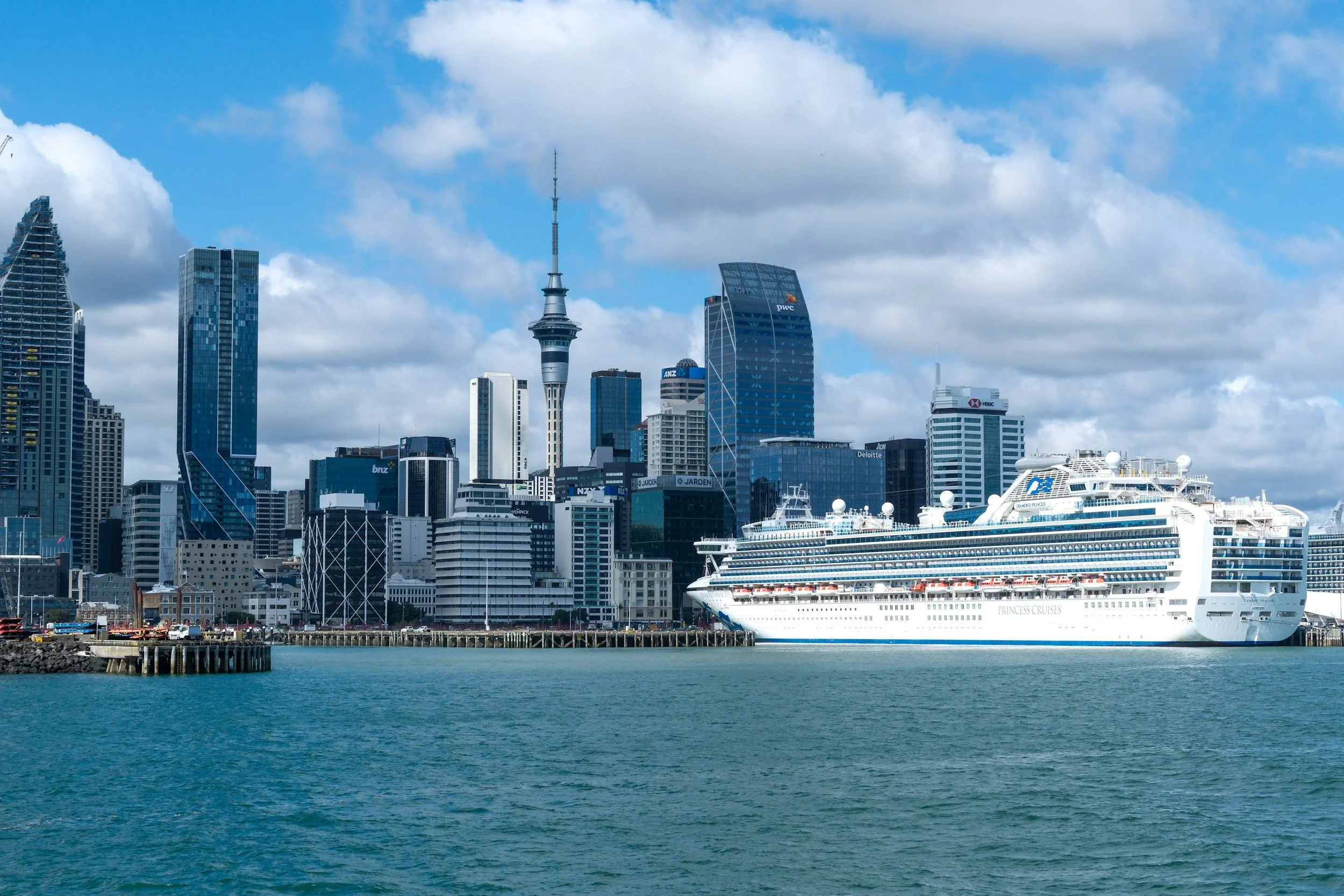
Is New Zealand just a holiday postcard?
The scenery's real. Nobody's denying that. But it's the side dish.
Student numbers rose 11% in 2025, and more than half of international students study in Auckland. So picture lecture halls and rush-hour buses, not a hiking trail. Indian students tend to pick data science, engineering, business analytics, hospitality, nursing and education. Agriculture and environmental science are standouts too. (StudyTravel Network, BusinessToday, 1News)
Go for the course. Let the coastline be your weekend.
Why masters students are rethinking the UK, Canada and Australia
Nobody's saying those countries are bad. They've just made the maths harder.
Canada first. In 2026 it plans to issue about 408,000 study permits, but only 155,000 of those go to students arriving for the first time. Say you're 27, four years into a job in Pune, and you want a masters. Fewer spots makes planning a lot harder. (Leap Scholar)
The UK is cutting its post-study work visa, called the Graduate visa, from two years to 18 months if you apply from 1 January 2027. Six months doesn't sound huge. Try job hunting on a ticking clock. (Conduira)
Australia's student visa now costs AUD 2,500, and its post-study work visa generally wants you to be under 35. If you're closer to 35 than 25, that one gets personal. (Yocket, Leap Scholar)
Rules are shifting everywhere. A country with a clear plan for after graduation starts looking pretty good.
What a masters in New Zealand actually gets you
Here's the practical stuff, minus the brochure language.
While you study, you can work up to 25 hours a week in term. That's rent-and-coffee money and some real experience, not a salary. After you graduate, the Post Study Work Visa lets you work for any employer in NZ for up to three years, depending on your degree. If you're Indian and you finish a PhD there, that stretches to four years from 16 November 2026. (BAL, Envoy Global)
There's a trade deal in the mix too. India and NZ signed a free trade agreement that came into force on 20 October 2026, and it has a special section on students and what they can do after graduating. (Envoy Global, PIB)
Now the money check. Immigration New Zealand wants proof that you have NZ$20,000 for each year of study to cover living costs, on top of your tuition fees. Bank statements are one way to show it. (Immigration NZ)
One catch before you plan your whole life around staying: a work visa isn't permanent residence. Read Immigration New Zealand's rules first.
Eight universities, one shortlist
New Zealand has eight universities, all public, and every one appears in the QS World University Rankings 2027, a popular world ranking list. Your 3 Idiots moment, but with a visa plan. Here's a quick map for masters hunters.
University of Auckland, Auckland. QS 2027 rank 67. Highest ranked; engineering, data science, business.
University of Otago, Dunedin. QS 2027 rank 198. Health sciences.
Massey University, Palmerston North, Auckland and Wellington. QS 2027 rank 215. Agriculture, veterinary science, design.
Victoria University of Wellington, Wellington. QS 2027 rank 241. Law and public policy.
University of Canterbury, Christchurch. QS 2027 rank 257. Engineering.
University of Waikato, Hamilton. QS 2027 rank 293. Management; lower living costs.
Lincoln University, near Christchurch. QS 2027 rank 419. Agriculture, environment, land management.
Auckland University of Technology (AUT), Auckland. QS 2027 rank 431. Career-focused business, IT, design, health.
Fees swing a lot by course. Auckland's Master of Data Science, for instance, is listed at roughly NZ$48,000 to NZ$55,000 a year on third-party sites. Massey, Waikato and Lincoln are generally cheaper. Check each university's own fee page before you budget anything. (Yocket)
Pick the course first and the ranking second. A #198 university that's brilliant at your subject beats a #67 one that isn't.
The honest pros and cons
We'd rather you pick NZ with your eyes open. So here's both sides.
The good bits:
• Up to three years of work after your degree, depending on what you studied
• A lower money bar: NZ asks you to show NZ$20,000 a year, while Canada and Australia ask for more (CAD 23,448 and AUD 29,710), and the gap holds even after converting currencies
• The trade deal puts no cap on how many Indian students can come
• Up to 25 hours a week of paid work while you study
The catches:
• The job market is smaller than in Canada, the UK or Australia, so competition for graduate roles is real
• Auckland and Wellington rents bite, and part-time pay won't cover your degree or the money you must show for your visa
• A work visa isn't permanent residence, and the rules do change
Figures: Immigration NZ, Leap Scholar, Ardent Overseas, Ministry of Commerce (India).
FAQs: study abroad in New Zealand
Is New Zealand a good place for a masters? Depends what you want. If you like a smaller, calmer place and a clear work visa afterwards, yes. If you're after the biggest job market going, compare it with the bigger countries first.
How much money do I need to show? NZ$20,000 for each year of study, for living costs. Your first-year tuition needs to be paid or covered as well.
Can I work while I study? Yes, up to 25 hours a week during term for eligible students. Check what your own visa says.
Can I stay and work after my masters? Yes. The Post Study Work Visa lets you work in NZ for up to three years, depending on your degree.
Does studying in NZ lead to residence? Not automatically. Residence is a separate application with its own rules, run by Immigration New Zealand. Think of the work visa as time to find skilled work, not a guarantee.
Still deciding?
New Zealand isn't a magic fix. It isn't just a postcard either. It's a smaller, calmer option with real study and work pathways, and it earns a spot on your shortlist.
No film-style ending needed. Just tell us your biggest study-abroad fear. Money, visas, loneliness, landing a job? Drop it in the comments and we'll tackle it in a future post.
Prefer answers in your inbox? Subscribe to our weekly newsletter and get one clear, jargon-free takeaway a week.
